
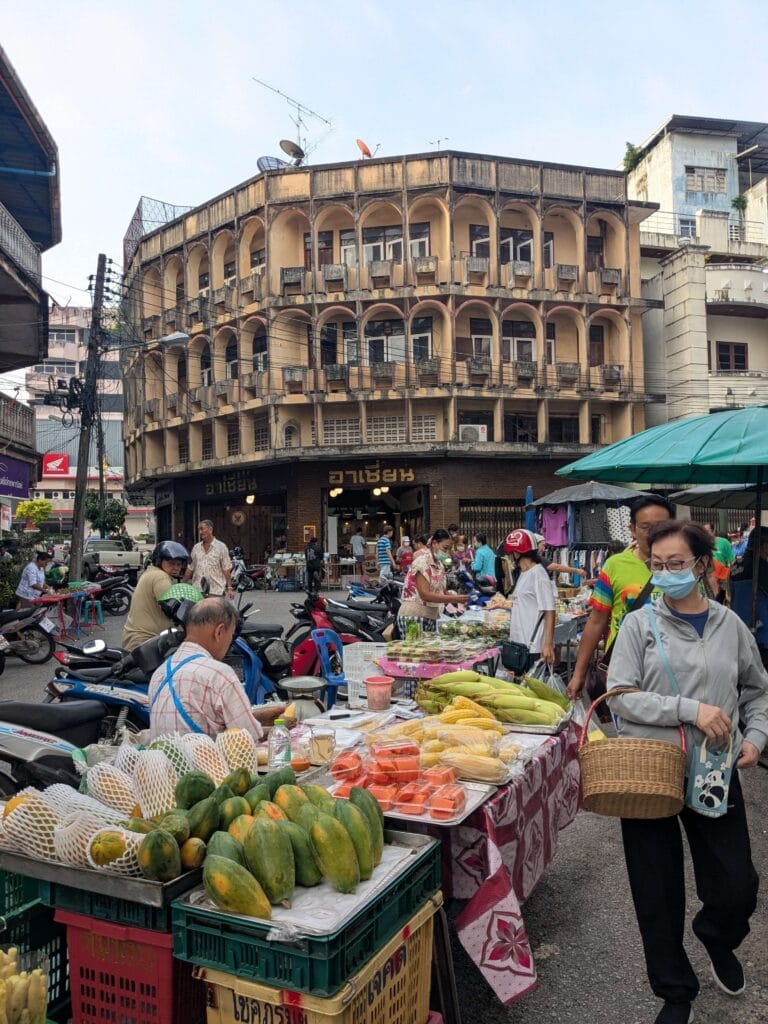
When I arrived in Trang, the city felt rusty at first glance — worn buildings, quiet corners, and a slower pace than the famous tourist spots of Southern Thailand. Yet, as morning arrived, the city suddenly woke up. Markets burst into life, scooters flowed through narrow streets, and the smell of steaming baskets filled the air. Trang may look calm, but beneath the surface, it breathes energy, flavor, and daily rhythm.
Dim Sum Morning at Kopi Sombat
Naturally, the journey started with breakfast. In Trang, breakfast means dim sum.
At Kopi Sombat, the tables fill early. Meanwhile, locals choose trays of small dishes, and steam rises from bamboo baskets as they go into the cooker. Soon, we sat down with kafe boran…
On the table:
- 🥟 Har Gao shrimp dumplings
- 🥯 Fried bun stuffed with moo daeng (Thai Chinese red pork)
- 🍵 Hot Chinese tea for balance
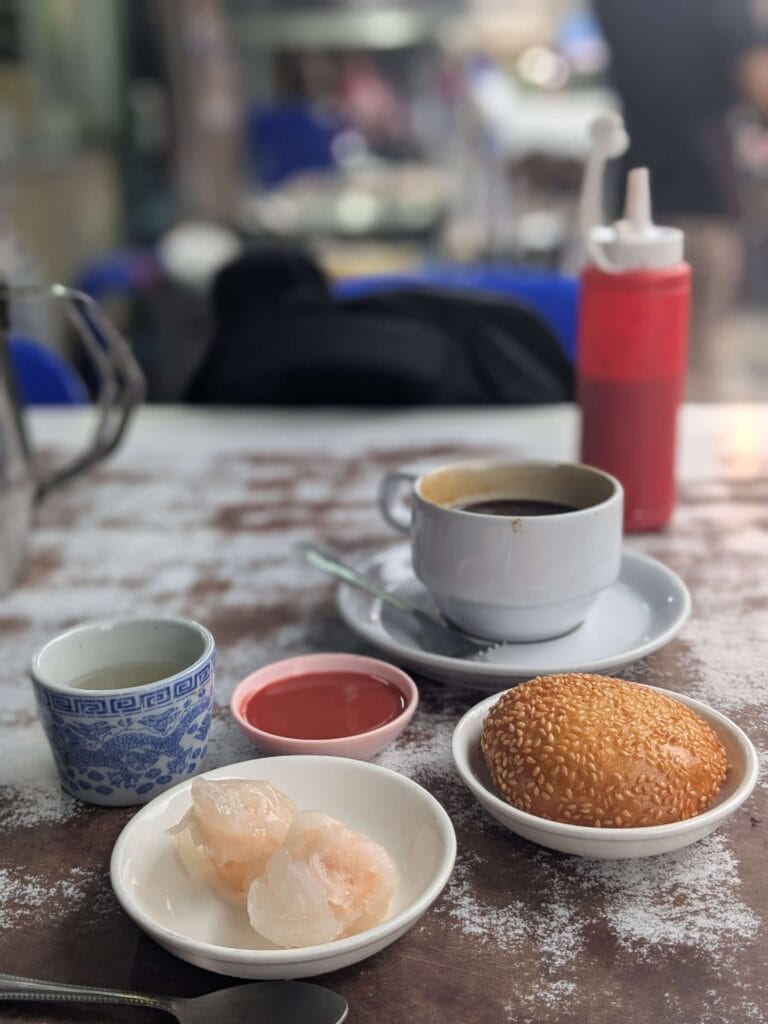
However, my favorite part wasn’t the dim sum itself – it was the Trang-style dipping sauce. Unlike Cantonese chili or soy sauce, Trang’s version uses red fermented tofu, giving it depth, saltiness, and a slightly funky richness. It connects Chinese culinary heritage with local Thai taste, and suddenly, dim sum becomes distinctly Trang.
The Morning Market – Life in Motion
After breakfast, we walked to the morning market. Quickly, the city shifted from quiet to alive. Vendors chopped vegetables, grilled meats, and shouted prices. Shoppers moved between stalls with purpose. Fish lay on crushed ice, fruits glowed with color, steam rolled from soup pots, and the air carried a mix of garlic, pork, and sweetness.
Ultimately, food here is not performance. Instead, it is daily life.
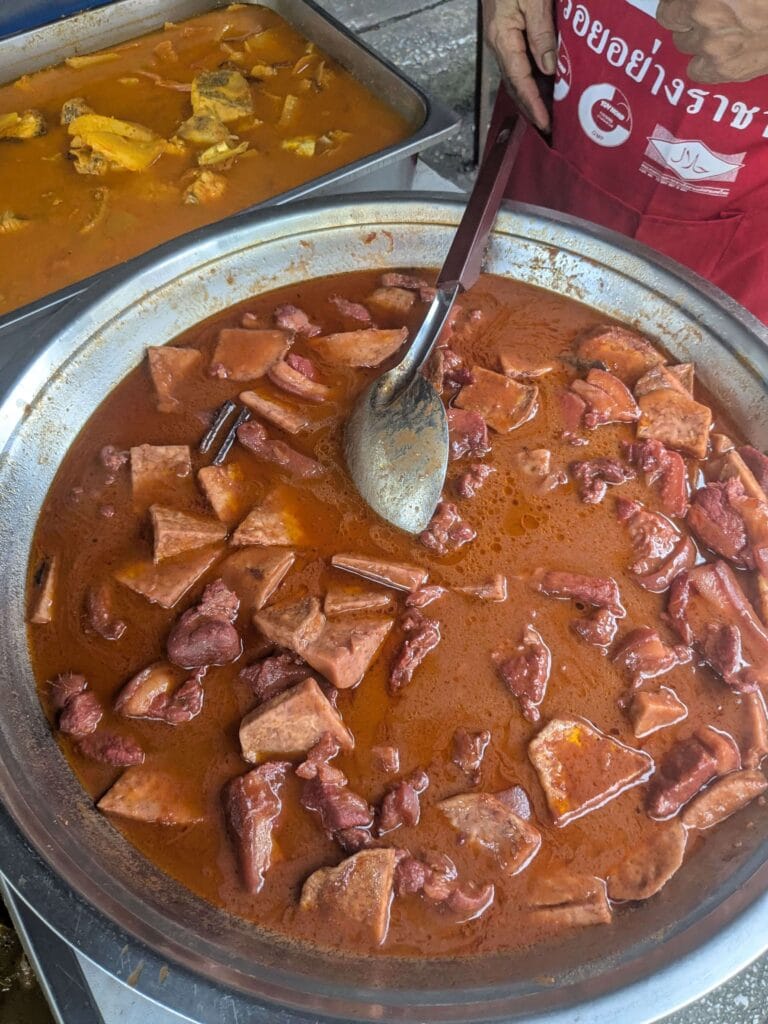
Among the many dishes, however, one stood out visually and emotionally: Kao Yok – thick, sticky, and slow-cooked pork belly with taro root.
Beyond trang, another more familiar Thai Chinese stronghold in Southern Thailand is Phuket. Both Trang and Phuket are deeply shaped by Hokkien Chinese heritage, even though they feel very different today. In Trang, you taste it in the dim sum mornings and family-owned shops, while in Phuket you see it in the colorful Sino-Portuguese streets, Chinese shrines, and vibrant festivals. Learn more about unique Thai Chinese here.
Moreover, Krabi is another amazing food destination, where markets, local eats, and coastal flavors create a completely different taste of the south.
A Dim Sum Feast with Friends
Later, I joined my Thai friend Jaru and her mother for what felt like a true Trang dim sum capital experience — a family meal.
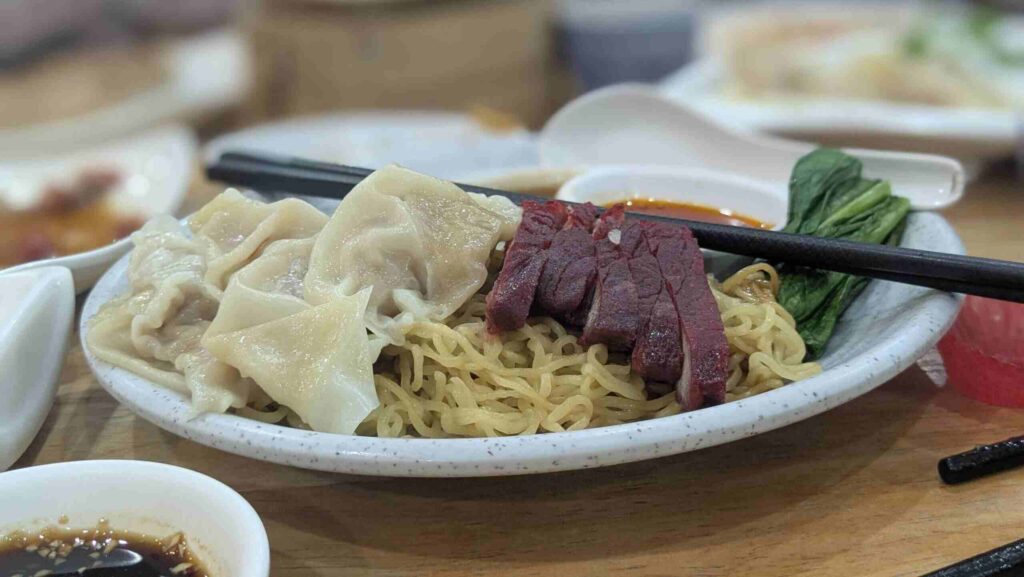
We went to Chen Jia, a fancy but classic Cantonese-style restaurant. The atmosphere buzzed with morning conversations, clinking plates, and fast-moving servers. Soon, our table filled with steamers and bowls.
We ate:
- 🥯 Steamed buns
- 🍜 Bamee moo daeng (egg noodles with red pork)
- 🐟 Luk chin pla (fish balls) served with a curry lemon sauce
Eating dim sum this way — with family, conversation, and shared plates — makes Trang feel less like a travel destination and more like a home. Food here isn’t just delicious. It connects people, cultures, and memories.
Why Trang Truly Deserves the Title “Dim Sum Capital”
Trang doesn’t simply serve dim sum. It lives with dim sum.
Dim sum here is breakfast culture, community meeting place, and culinary identity. It holds Chinese roots, local adaptations, and Southern Thai personality in one meal. As a result, every bite feels both familiar and new.
Trang may not shine with postcard beaches or luxury resorts. Instead, it wins your heart through food, people, and honest daily life. And maybe, that makes it even more special.