
I came to Hanoi expecting to eat phở, and I did. BUT – the bowls that stayed with me were not only the famous ones. The most unique Noodle soups in Hanoi hide in the city’s narrow alleys, and some of the best meals I had were built around eel, a French-inspired beef stew, fish cakes, tomatoes, pineapple, and noodles with textures like nowhere else.
Noodle Soups in Hanoi: More Than Phở
In Hanoi, noodle soup is not a single dish but a language of broth, toppings, and texture. A bowl can be delicate, sour, rich, crisp, or all of those things at once. The city is good at making familiar ingredients feel specific to one corner, one vendor, or one morning habit.
I paid attention to the small details: the way noodles held sauce, the crunch of fried toppings, the sweetness of simmered beef, and the lift of tomato in fish broth. These three bowls are useful for visitors as they show different sides of noodle soups in Hanoi. Each one has a clear identity, and each rewards slow eating.
Miến Lươn Trộn: Dry Glass Noodles With Fried Eel
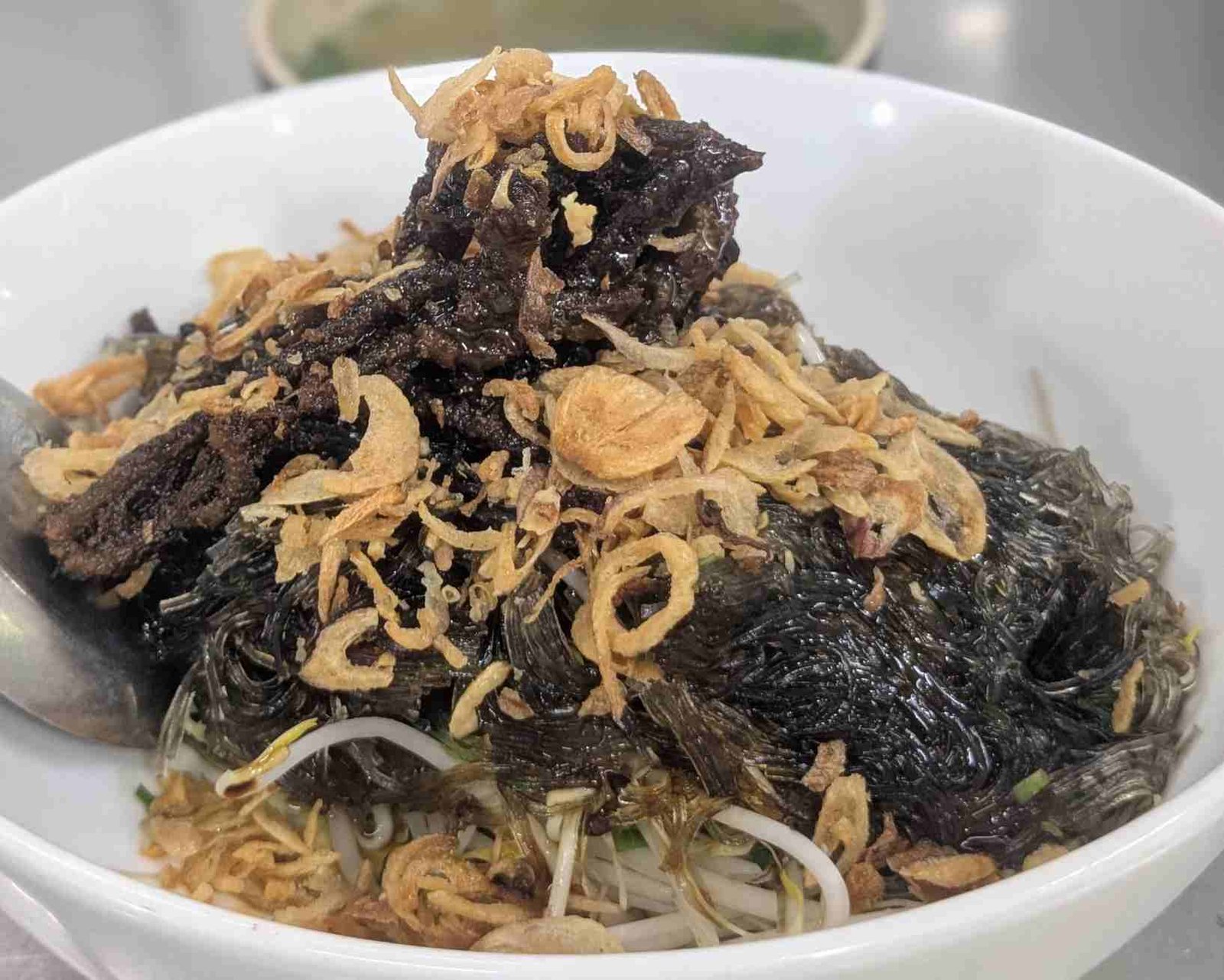
Miến Lươn Trộn is the bowl I think about when I want texture more than broth. The glass noodles are served dry, then seasoned with black soy sauce until they turn glossy and savory. On top sit small fried eels, crisp enough to crackle but still carrying the earthy flavor of the fish.
The soup comes on the side, which changes the rhythm of the meal. I like taking a few bites of the noodles first, when the fried eel is still loud and crunchy, then sipping the broth to reset my palate. It feels like a practical Hanoi solution: keep the noodles springy, keep the topping crisp, and let the diner decide when to soften the edges.
This is not a soft, comforting noodle soup in the usual sense. It is darker, drier, and more direct. If you enjoy contrasting textures, Miến Lươn Trộn is one of the most satisfying bowls to try in Hanoi.
Phở Sốt Vang: Pho With Red Wine Beef Stew Broth
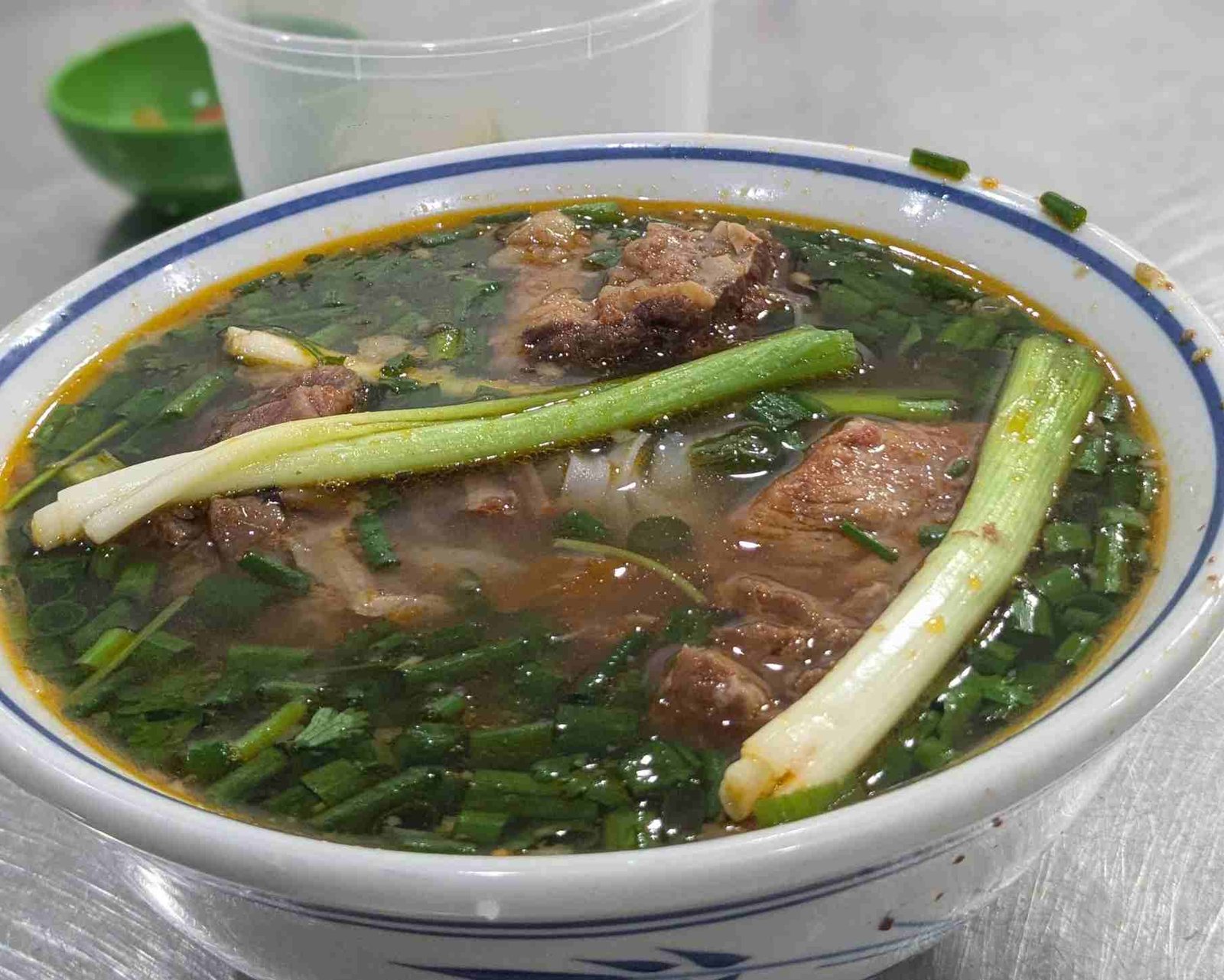
Phở Sốt Vang sits close enough to pho to feel familiar, but the broth leads it somewhere richer. Instead of the lighter, clearer bowl many visitors first associate with Hanoi, this version carries the flavor of red wine beef stew. The beef gives the soup depth, and the noodles keep it from becoming too heavy.
I find this bowl especially interesting because it shows how flexible phở can be in Hanoi. The city treats pho with respect, but not as something frozen in time.
The best bites are the ones where the noodle, beef, and broth arrive together. The soup has weight, but the phở noodles give it movement. It is a good bowl for anyone who wants phở but also wants to understand how Hanoi cooks beyond the most expected version.
Bánh Đa Cá: Fish Noodle Soup With Tomato and Pineapple
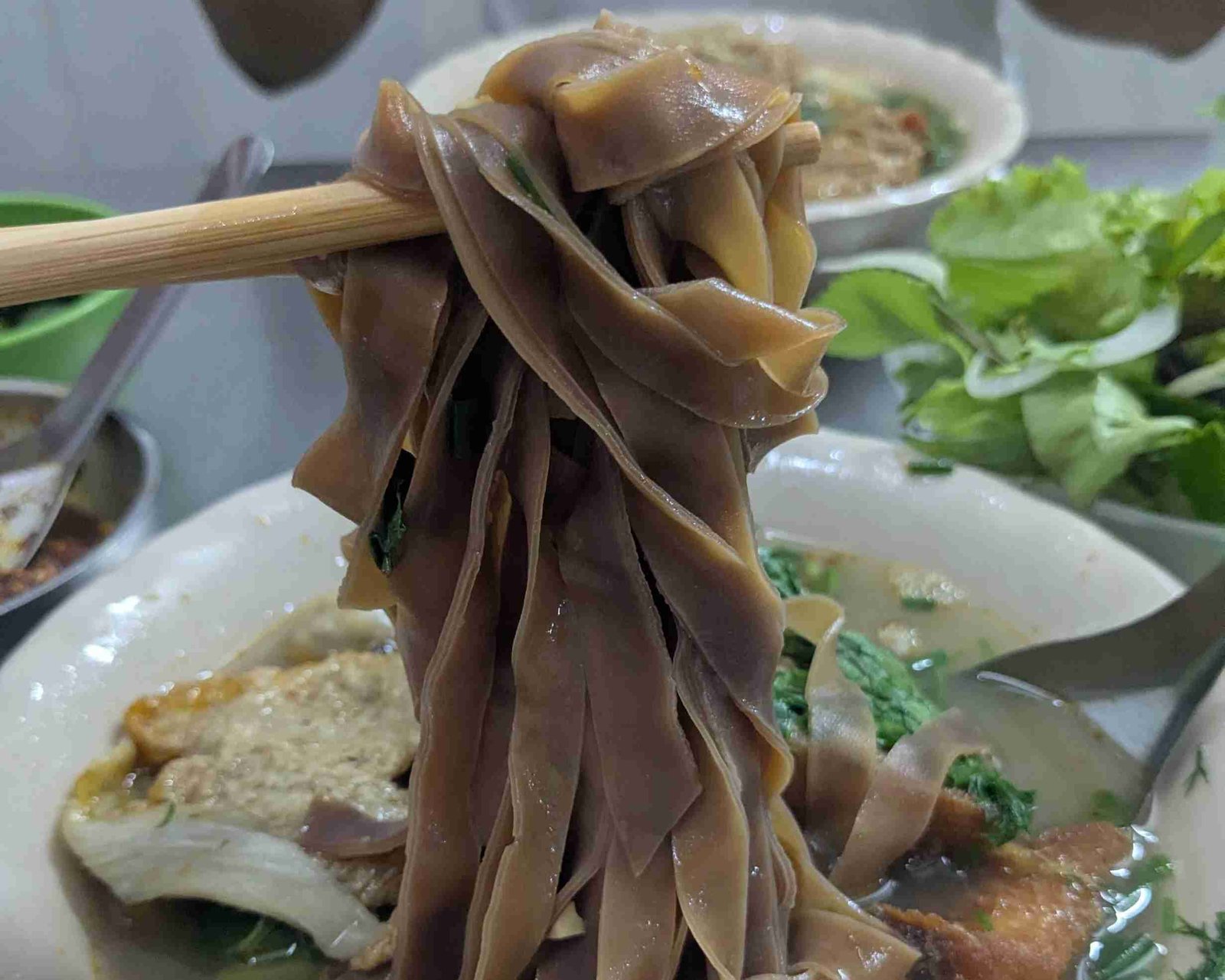
Bánh Đa Cá gives a completely different kind of pleasure. The broth is built with tomato and pineapple, so it has brightness before it has sweetness. That gentle acidity works well with the fish elements, especially the Chá Cá, which adds chew and a clean savory note.
The noodles are the part that made me slow down. They are wide and distinct, not slippery in the same way as Phở noodles and not as delicate as glass noodles. Their shape helps them hold the broth, and each spoonful feels more substantial than the color of the soup suggests.
From all noodle soups in Hanoi, THIS is the bowl I would recommend when Hanoi starts to feel dense and you want something lighter without losing flavor. The tomato and pineapple give the soup a lift, while the fish and noodles keep it grounded. It tastes practical, balanced, and very local in spirit.
If you only eat one noodle soup in Hanoi, Phở will probably find you first. But if you make room for Miến Lươn Trộn, Phở Sốt Vang, and Bánh Đa Cá, you will leave with a wider sense of how the city eats.
Conclusion
Hanoi taught me that Vietnam’s noodle culture goes far beyond a single bowl of Phở. Every recipe reflects local ingredients, traditions, and the city’s own rhythm of daily life. If you’re planning a longer trip, start with my Vietnam travel and food guide for an introduction to the country’s regional flavors. Then continue to central Vietnam with my Hoi An food guide, where I share three local dishes that should be on every food lover’s list. Together, these guides offer a deeper look at Vietnam’s diverse culinary traditions.